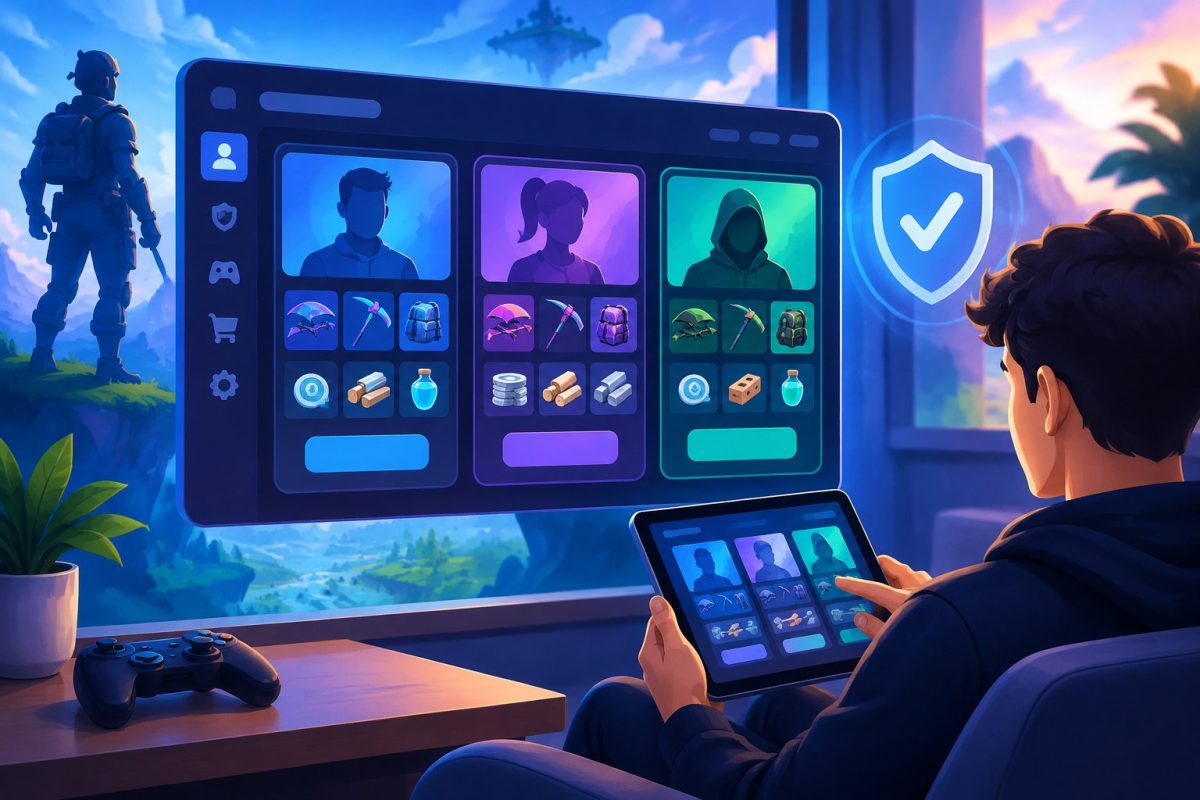
Buyers comparing ways to buy fortnite accounts should prioritize verifiable locker details, full email access, platform compatibility, and clear buyer-protection terms, since purchased accounts remain exposed to recovery and publisher-enforcement risks.
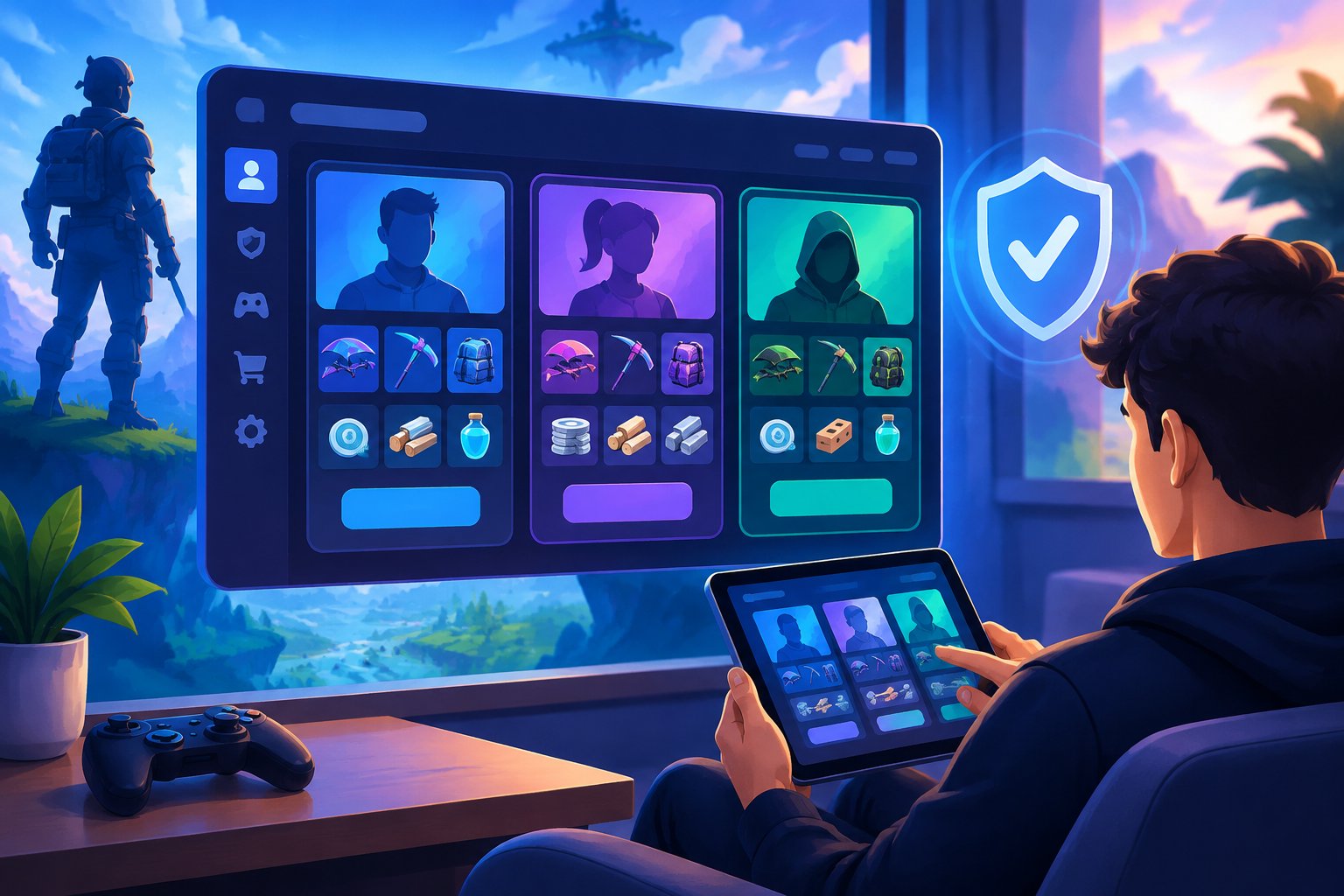 A listing’s skin names and screenshots only describe what a seller claims. Buyers need account-specific proof and a clear plan for securing the login before they pay.
What Should You Check Before Choosing an Account?
A reliable comparison starts with proof of the listed locker, control of the registered email, and confirmation of the account’s linked platforms. Fortnite accounts for sale can look similar in a marketplace grid while differing in access, item details, or recovery exposure.
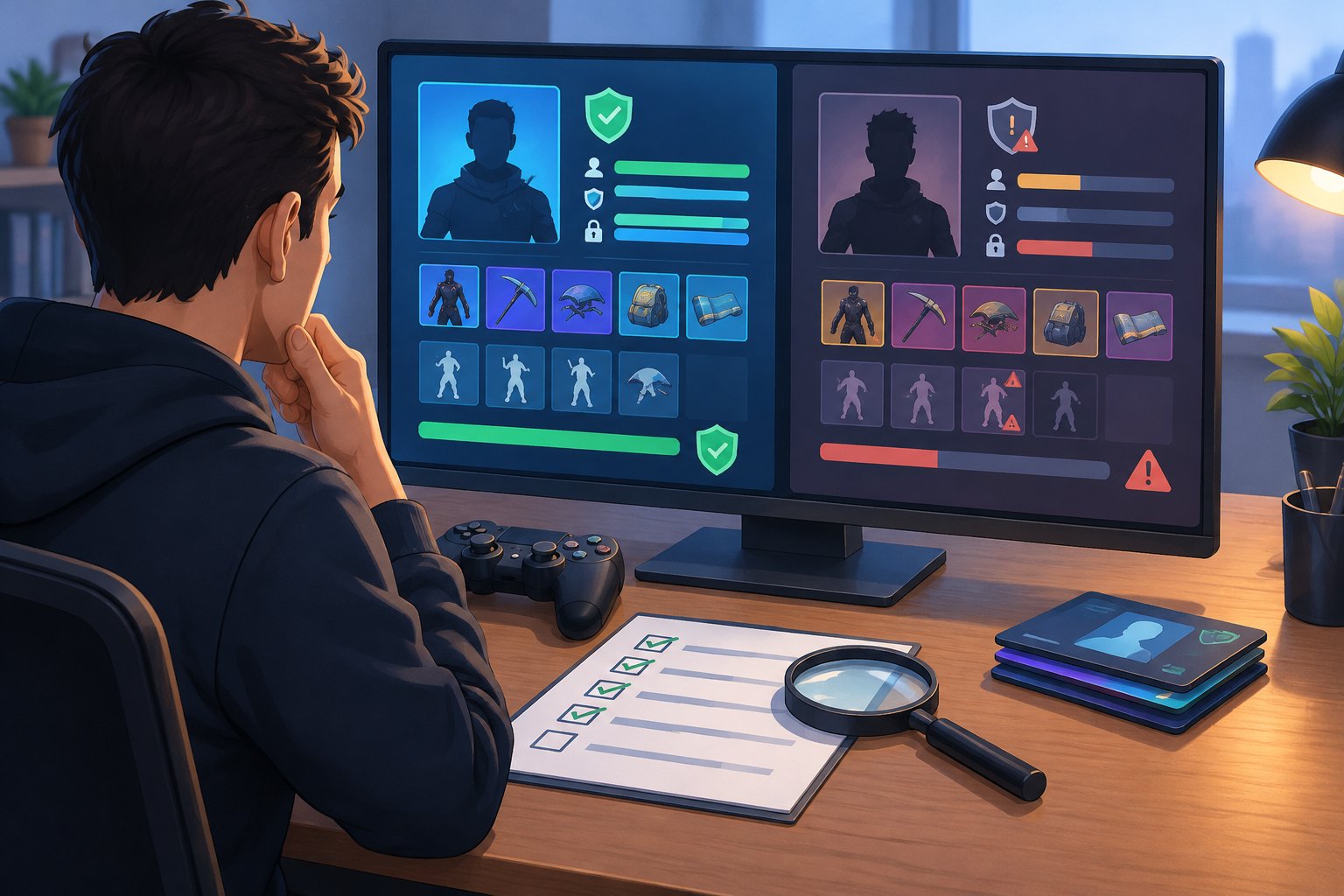 How Can You Verify the Locker and Listed Items?
Buyers should ask for current, account-specific evidence showing the locker and any items highlighted in the listing. A screenshot can help, while a live account view or seller-provided recording can provide more context. Evidence should match the exact account being sold.
The listing should identify cosmetic names and styles precisely. A broad claim such as “rare locker” gives little detail about which items are included, and an old screenshot may not represent the account as it stands at purchase. Buyers can compare the evidence against the seller’s written inventory and keep a record of both.
A category page, such as LoLBoost’s Fortnite account listings, can help buyers find offers to assess. The category itself does not verify any individual account’s items or access.
Why Do Email Access and Platform Links Matter?
Full email access gives the buyer control of the inbox associated with account recovery. Buyers should confirm exactly which email credentials transfer, whether the registered address can be changed, and whether access to recovery messages is included. Email access reduces one route back into the account, though it cannot erase the original owner’s knowledge of its history.
Platform links affect where an account can be accessed and which console or PC identities are attached. Buyers should request a written list of linked platforms and confirm any unlinking or relinking conditions before paying. A promised platform setup should match the buyer’s intended device and the marketplace’s stated delivery terms.
Which Account Type Fits Your Budget and Goals?
The right account type is the one whose verified contents match the buyer’s goal and whose transfer risk fits the amount at stake. Skin-focused listings, V-Bucks accounts, and inexpensive offers call for different checks.
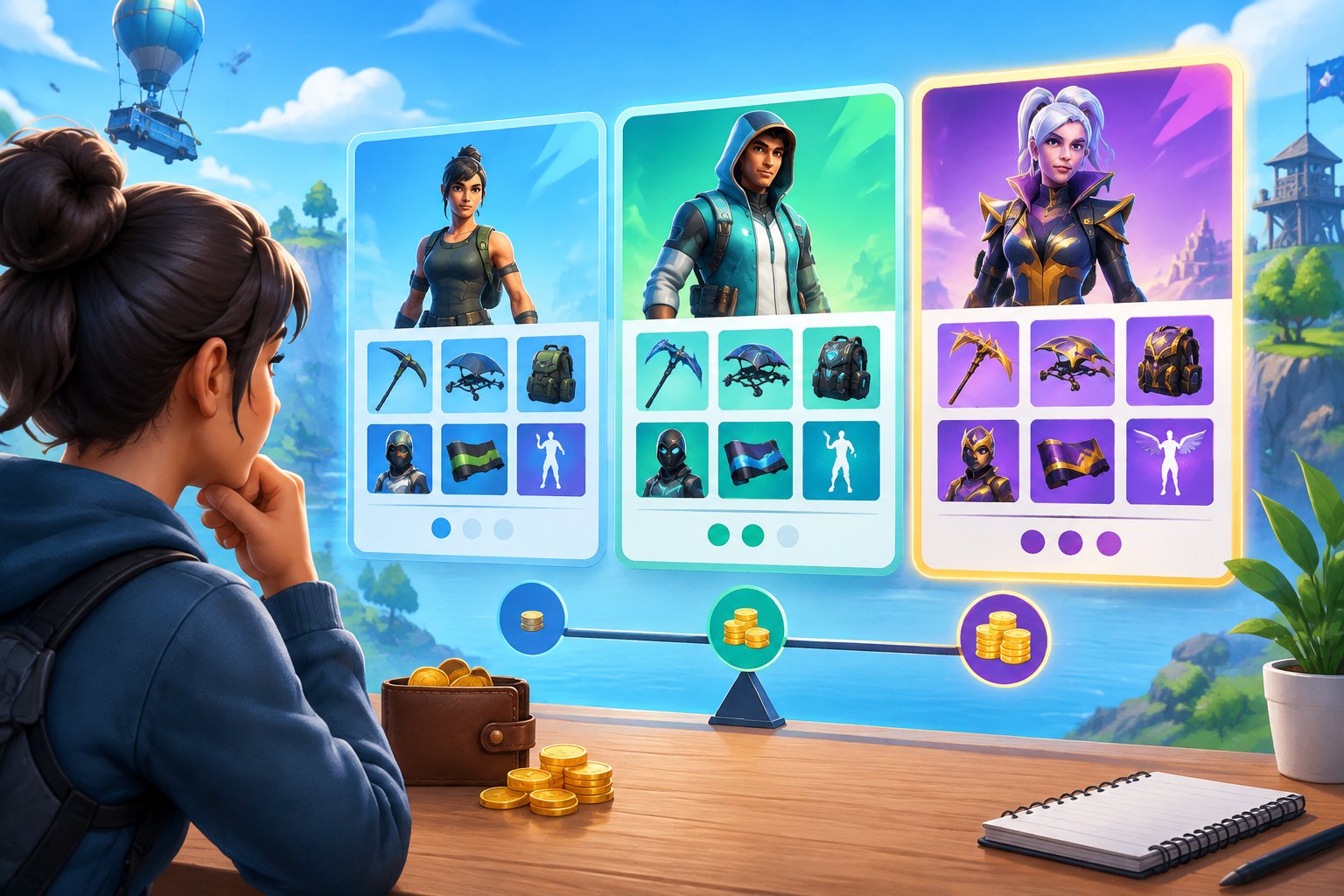 What Makes an OG Account Different?
“OG” describes an account associated with Fortnite’s earlier seasons or cosmetics; it does not prove who created the account or that the seller is its original owner. An og fortnite account or fortnite og account listing should specify the items and styles that support the claim.
Buyers may encounter names such as Black Knight, Renegade Raider, Skull Trooper, and Aerial Assault Trooper. Listings may also feature Travis Scott or the Travis Scott skin, Ikonik, Galaxy or a galaxy skin, Wonder, Wildcat, Leviathan Axe, and Take the L. Each name needs account-specific evidence, since a label alone does not confirm ownership, style, or availability on the account.
The value of og skins and rare skins depends on the buyer’s interest in those cosmetics and the evidence behind the offer. A high skin count does not establish that a highlighted item is present, and an “OG” label does not resolve account recovery or transfer concerns.
Are Rare-Skin or V-Bucks Accounts Right for You?
A rare-skin account suits buyers who place value on particular cosmetics and can verify each advertised item. The listing should show the named skin in the account’s locker, with the relevant style if the offer emphasizes one. Buyers should treat “rare Fortnite skins” as a seller description until the specific contents are documented.
V-Bucks accounts appeal to buyers focused on an advertised balance. The balance should be shown on the account being transferred, and the listing should state any platform or regional conditions that affect access. A V-Bucks balance does not establish that the account can be securely transferred or retained.
What Should You Expect From Cheap Accounts?
Cheap Fortnite accounts require especially careful checks because a low price can reflect a small locker, limited access, or an account with unresolved risks. Buyers should compare the seller’s evidence with the written listing and check the email, linked-platform details, delivery terms, and dispute policy before payment.
A bargain listing with vague item descriptions or unclear email handover leaves important questions unanswered. Buyers should pause when the seller pressures them to pay outside the marketplace or offers only generic screenshots.
Where Can You Compare Account Listings?
Buyers should compare listing detail and written protection terms across marketplaces, then judge the account itself against those terms. A marketplace name or seller rating cannot establish ownership history or guarantee that an account will remain accessible.
A Fortnite marketplace category at PlayerAuctions presents account offers alongside other Fortnite-related listings. Eldorado’s Fortnite account listings provide another place to compare seller descriptions and account claims.
What Should You Look for in a Fortnite Account Shop?
A useful fortnite account shop makes the account’s contents, delivery method, linked platforms, email access, and refund or dispute terms easy to inspect. Buyers should check whether the listing provides account-specific evidence and whether the seller explains what happens if the credentials fail.
A BuyAccount marketplace page advertises escrow-held payments, full email access, and 14-day buyer protection. Buyers should read the applicable terms to see which problems qualify for a claim and what evidence or deadlines apply. Those terms describe the marketplace’s stated protections, not a guarantee against publisher action.
How Do Marketplace Protections Differ?
Buyer protection depends on the marketplace’s written coverage, claim process, and deadline. Before payment, buyers should identify whether a policy covers failed delivery, inaccurate listing details, or account recovery, and whether it excludes events outside the seller’s control.
When an offer mentions TradeShield, the buyer should review its specific terms, including covered disputes and the evidence required. Crypto payments also warrant close review of payment and dispute terms, since a payment’s handling depends on the marketplace and payment method. Buyers should keep transaction records and use the marketplace’s stated payment process.
What Risks Come With Buying an Account?
A purchased Fortnite account carries recovery, access, and publisher-policy risks even when the listing appears complete. Full email access can improve control over recovery messages, while account history and prior ownership remain outside the buyer’s control.
Can the Original Owner Recover the Account?
The original owner may retain information that supports an account-recovery request, such as creation details or past transaction records. A password change and control of the registered email reduce some access paths, but they do not erase that history or guarantee permanent control.
Before payment, buyers should confirm the seller’s recovery and dispute terms and preserve the listing, messages, and proof of transfer. After delivery, the buyer should secure the email and account credentials promptly, enable available authentication protections, and sign out other sessions where the account settings allow it.
What Does Epic’s Account Policy Mean for Buyers?
Epic’s account terms restrict account transfers and sharing, so buying or selling access can put continued use at risk. A marketplace warranty cannot override Epic’s enforcement decisions, and buyers should factor that policy into the purchase decision.
A listing that promises ban-free access or official authorization should be treated with caution. The account’s cosmetics and delivery terms do not change the publisher’s rules.
Choose Verifiable Access Over Skin Hype
A sound purchase decision gives more weight to account-specific proof and clear access terms than to promotional skin labels. Buyers should verify the locker, registered-email handover, linked platforms, payment process, and applicable dispute rules before paying.
Rare cosmetics may be appealing, yet screenshots and seller assurances cannot settle recovery or publisher-policy risks. If a listing leaves any key access term unclear, buyers should hold off until the seller provides a clear answer in writing.
Frequently Asked Questions
What is the best place to buy Fortnite accounts?
The best fit is a marketplace with detailed listings, a clear payment process, and written buyer-protection terms. Buyers should still verify the individual account and account-transfer risks, since marketplace protections cannot guarantee continued access.
Are $1 Fortnite accounts legitimate?
A $1 price alone does not prove that an account is legitimate or that its contents match the listing. Buyers should treat unusually low-priced offers cautiously and check seller evidence, email access, and payment protections before proceeding.
Are OG Fortnite accounts worth buying?
An OG account may suit a buyer who values its verified older cosmetics and accepts the risks attached to transferring an account. The “OG” label alone does not prove account age, item ownership, or long-term access.
Can Epic restrict or ban a purchased account?
Yes. Epic’s account terms restrict transfers, and a purchased account may face enforcement that prevents continued access. Marketplace protection cannot guarantee a different outcome.
What does full email access mean when buying an account?
Full email access means the buyer receives control of the inbox associated with the account, including access to recovery messages. The buyer should confirm that the credentials transfer and that the registered email can be secured or changed; email access does not remove account-history risks.