Ready to buy? Browse verified LoL accounts and hand-leveled LoL smurf accounts on LoLBoost.
How to Tell If a LoL Account Is Hand-Leveled or Botted (2026)
You're looking at a level 30 League of Legends account listing, and the seller swears it's hand-leveled. There's no quick way to confirm that from a screenshot alone, but there are specific, checkable signals that separate a plausible claim from a red flag.

A hand-leveled League of Legends account shows varied champions, mixed game modes, and inconsistent session timing in its match history, while a botted account tends to show repetitive queue types, narrow champion pools, and mechanically even play patterns. Neither pattern proves what happened before you bought it, and neither removes the ban risk tied to buying an account in the first place. The real work is checking leveling history, ranked eligibility, and email control as three separate questions, not one.
This matters because the cheapest listings on any marketplace are usually cheap for a reason, and the reason is often automation that Riot Games' systems are built to catch. Knowing what to look for in match history, what a seller's warranty actually covers, and what Riot's rules say about account transfers puts you in a much better spot before you send payment.
What Makes an Account Hand-Leveled or Botted?
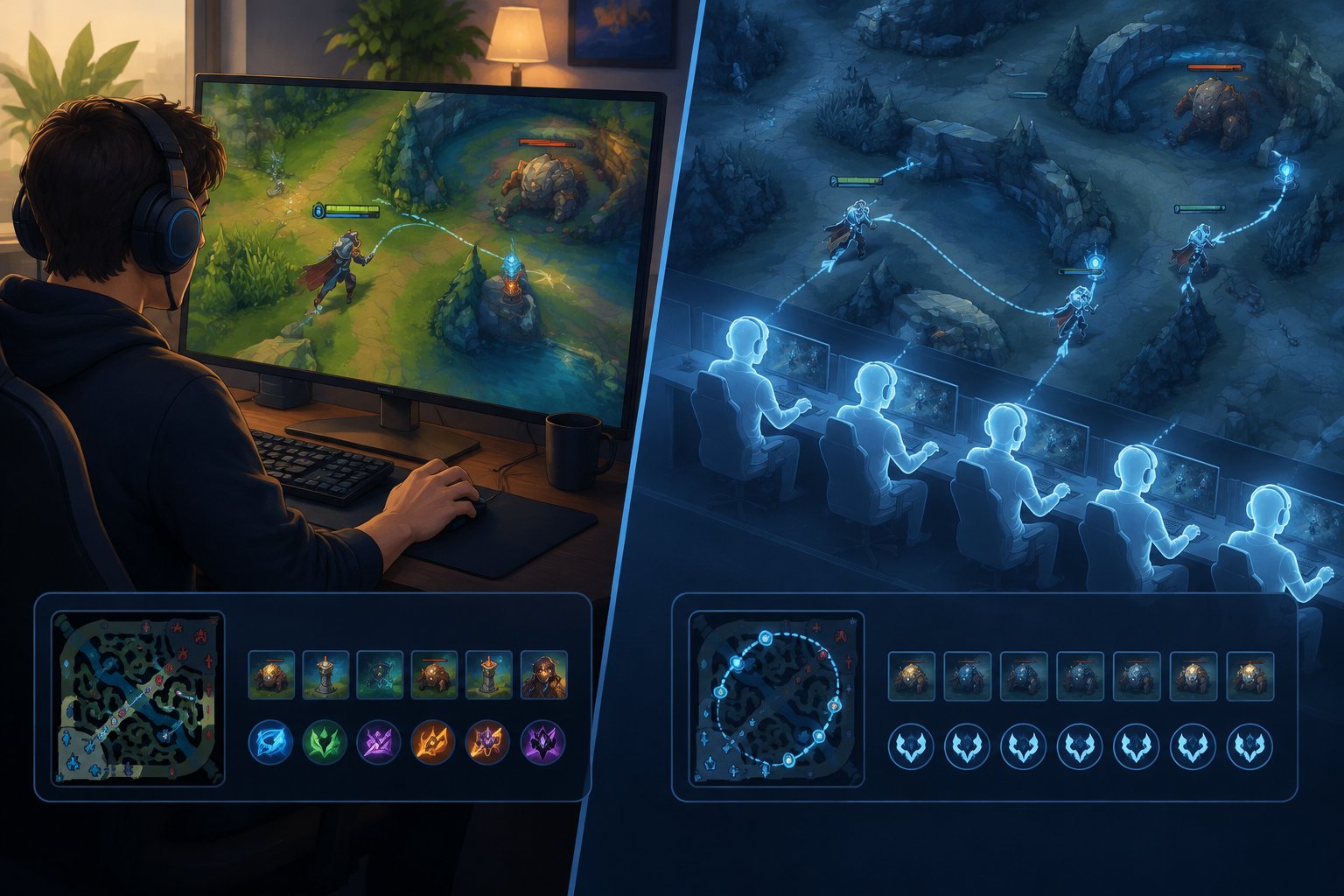
A hand-leveled League of Legends account was played to level 30 by an actual person sitting at a keyboard, making the small, inconsistent decisions that real matches involve. A botted account reached the same level through software that queued, played, and sometimes even chatted on a loop, often inside bot farms running dozens of accounts at once.
How Does Human Leveling Differ from Automated Leveling?
Human play produces noise. A real player loses lane sometimes, tries off-meta champions, dodges a queue, or takes a two-week break mid-leveling. Automated leveling produces consistency: same champion rotation, same game length, same win pattern, repeated across dozens of games because the script doesn't get bored or tilted.
Hand-leveled accounts are advanced by real players meeting the game's normal requirements over time, while botted ones rely on scripted procedures that may not always behave the way a real match would, according to this glossary entry on botted accounts. That difference in origin is exactly what shows up (or doesn't) in the data you can check later.
Why Does Level 30 Alone Prove So Little?
Level 30 only confirms an account accumulated enough experience points to unlock ranked play. It says nothing about how those experience points were earned.
A bot farm can push an account to level 30 in a fraction of the time a human player needs, using scripts that queue bot or co-op matches back to back. The level number on a seller's listing is a milestone, not a credential, and treating it as proof of legitimate play is the single most common mistake buyers make.
What Should You Check in Match History?
Match history is the most useful public evidence you have, and it rewards a careful read more than a glance. The goal isn't spotting one weird game: it's noticing whether a pattern of sameness runs through dozens of them.
Look for Repetition in Game Modes and Durations
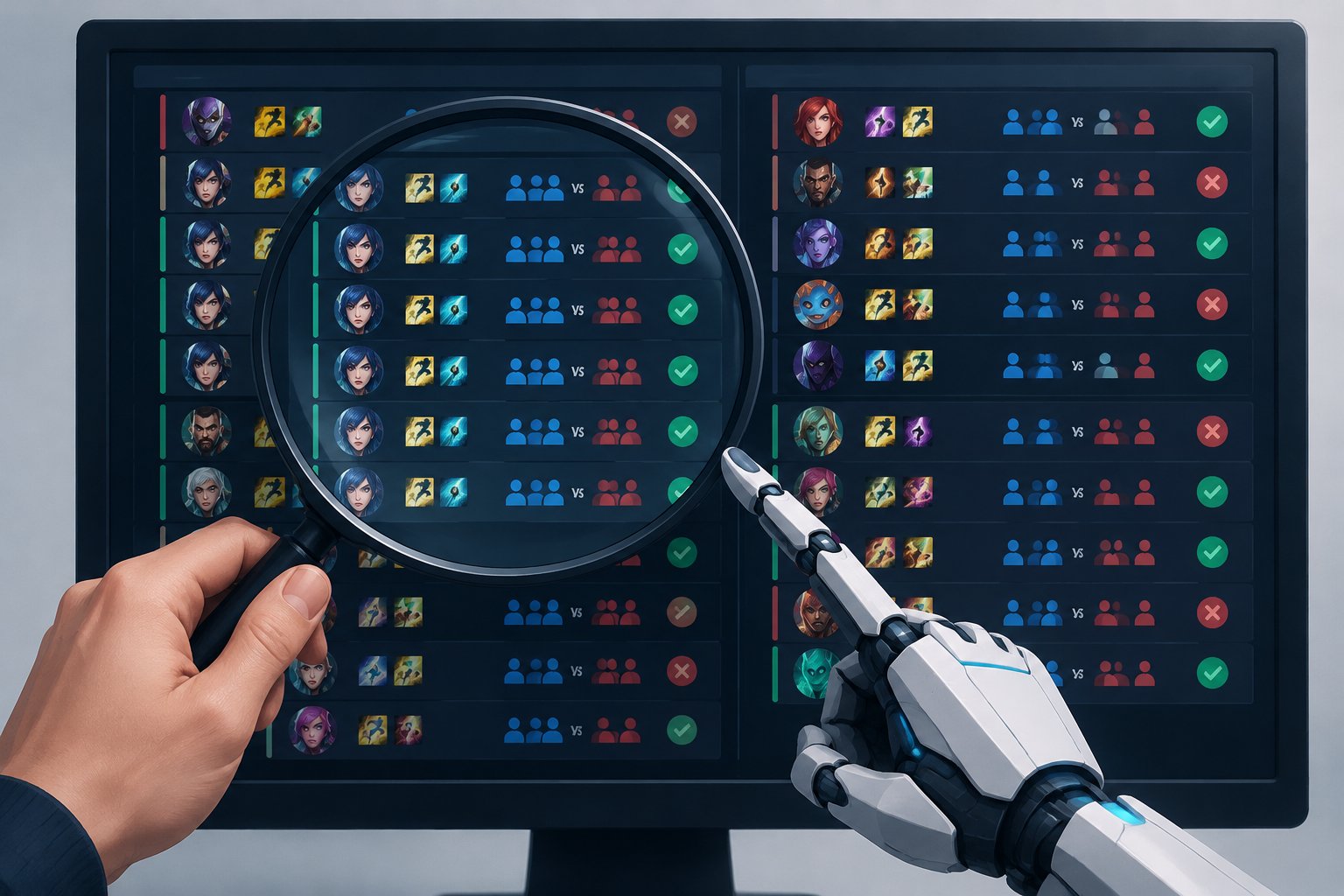
Bot-leveled accounts tend to show long runs of near-identical bot games, a narrow champion pool, and unnatural session lengths, as described in this breakdown of LoL account buying risk. If fifteen games in a row run the same mode, close within a few seconds of each other in duration, and feature the same two or three champions, that's a pattern worth asking about directly.
Natural gameplay has texture: Summoner's Rift mixed with the occasional ARAM, game lengths swinging from 22 to 38 minutes, queue times that vary with time of day.
Compare Champions, Results, and Play Sessions
A believable hand-leveled account usually shows a wider champion spread and a win rate that isn't suspiciously even. Tools built for this exist: a LoL account checker can surface playtime, mastery points, and the champions an account actually plays, while account analysis platforms break down rank, roles, and match trends for a fuller picture.
Session clustering matters too. Real players play in bursts tied to free time, evenings, weekends, gaps for school or work. Bot sessions often run at mechanically even intervals around the clock.
Know What a Screenshot Cannot Prove
A match-history screenshot shows what happened in those specific games, not who controlled the mouse. A seller can hand-pick a clean stretch of games to show you, or the account could have been bot-leveled early and switched to human play later (or the reverse).
Varied match history supports a hand-leveled claim. It doesn't authenticate the account, and it doesn't rule out automation at some earlier point in its history. Treat it as one data point, not a verdict.
How Does Each Leveling Method Affect Ban Risk?
Bot-leveled accounts carry a materially higher ban risk than hand-leveled ones, because the leveling process itself violates Riot Games' rules on automation. That risk doesn't disappear once the account changes hands, and it doesn't disappear if the new owner plays entirely by hand going forward.
What Do Riot Games' Rules Say About Automation and Account Sales?
Riot Games publishes its own account penalties and enforcement policy, and it treats both scripted play and account trading as violations, not gray areas, as laid out in Riot's account penalties and enforcement FAQ. Buying, selling, or transferring an account breaks the terms of service regardless of how the account was leveled.
Hand-leveled accounts are generally considered more reliable and less likely to be banned because they're earned through legitimate gameplay, while botted accounts carry a higher detection risk tied to the automation itself, per this comparison of botted and hand-leveled accounts. Reliable isn't the same as risk-free.
Can an Account Be Banned After It Changes Hands?
Yes. Enforcement action can land on an account well after a sale closes, whether the trigger is leveling history, a shared-device flag, or unrelated behavior from the previous owner. Buying an account levelled by hand and asking for a match-history screenshot lowers risk, and pairing that with escrow and published buyer protection gives you a path to a refund if a problem surfaces early, according to this guide on getting banned for buying a LoL account. No seller claim, warranty, or hand-leveled label removes that underlying exposure, since the transfer itself is what breaks the rules.
What Should You Verify Before Paying?
Verification means checking three separate things, not one. A seller's word that an account is "hand-leveled" tells you nothing about whether you'll keep control of it or whether it can play ranked the way you expect.
Ask for Evidence Beyond a Hand-Leveled Label
Push past the label and ask for specifics: full match history going back to level 1 if possible, mastery point distribution across champions, and any gaps in play dates. A seller who hesitates to show raw match history, or only offers a cropped screenshot, is giving you less than they could.
Confirm Email Control and Read the Warranty
Full recovery information matters: username, password, the email tied to the account, and the birthdate on file, according to this guide on buying LoL accounts safely. Verified email access, meaning you can fully change the registered address and recovery details, is what actually puts the account under your control.
Read the warranty terms before paying, not after a ban. No active penalties and full original email access are what make an account sellable in the first place, as outlined in this LoL account price guide. A warranty can offer a replacement or refund under specific conditions; it doesn't prevent a ban from happening.
Check Ranked Eligibility and Listing Details
Confirm the account can queue for ranked mode at the tier advertised, and ask how much blue essence is banked versus spent. Some sellers, including platforms like EloAscend, list these specifics directly; a listing missing basic details like current rank restrictions or champion count is worth a direct question before you commit money.
Is the Lower Price Worth the Uncertainty?
A cheaper botted account usually costs less because it took less time and oversight to produce, not because it carries less risk. Price and risk move in opposite directions here, and that trade-off is worth pricing out before you decide.
Why Do Human-Leveled Accounts Usually Cost More?
Botted accounts are typically cheaper than hand-leveled ones because of the automated nature of their creation, while hand-leveled accounts cost more in seller time and are considered more reliable, according to this comparison of botted and hand-leveled accounts. On one active marketplace, the median asking price sits around $32, ranging from roughly $7 for a fresh level 30 smurf up to over $1,000 for accounts loaded with rare skins, based on this LoL account price breakdown by rank and server. A separate price guide puts a decent smurf account in the $15 to $35 range, warning that anything under $10 is "almost certainly botted garbage that'll get banned within a month," per this LoL smurf account cost guide.
| Hand-Leveled Account Botted Account | ||
| Typical price range | $15-$35+ | Under $10-$15 |
| Match history pattern | Varied modes, champions, sessions | Repetitive modes, narrow champion pool |
| Ban risk at purchase | Lower, not zero | Higher |
| Warranty likelihood | More common from established sellers | Rare or unreliable |
When Is Leveling Your Own Account the Better Choice?
Leveling your own account from level 1 removes the transfer risk entirely, since nothing about the account history involves a stranger's hands or Riot's rules on account sales. It costs time instead of money, roughly the hours it takes to hit level 30 through normal queues.
If ranked access is urgent and budget allows it, a hand-leveled account from a seller with a clear warranty and verified email handoff narrows the gap. If you have the time and want zero exposure to transfer-related bans, leveling fresh is the more conservative path.
Choose Evidence Over a Seller's Label
A hand-leveled label on a listing is a claim, not a guarantee, and the match history behind it is the closest thing to evidence you'll get before paying. Varied champions, mixed game modes, and natural session gaps support that claim; repetitive patterns across dozens of games should make you ask harder questions.
Checking leveling history, ranked eligibility, and email control as three separate items, rather than trusting one screenshot to cover all three, is what actually protects you here. None of it eliminates ban risk tied to buying a transferred account in the first place, so weigh that against the hours saved before you send payment.