
 Clash of Clans
On this page (20)
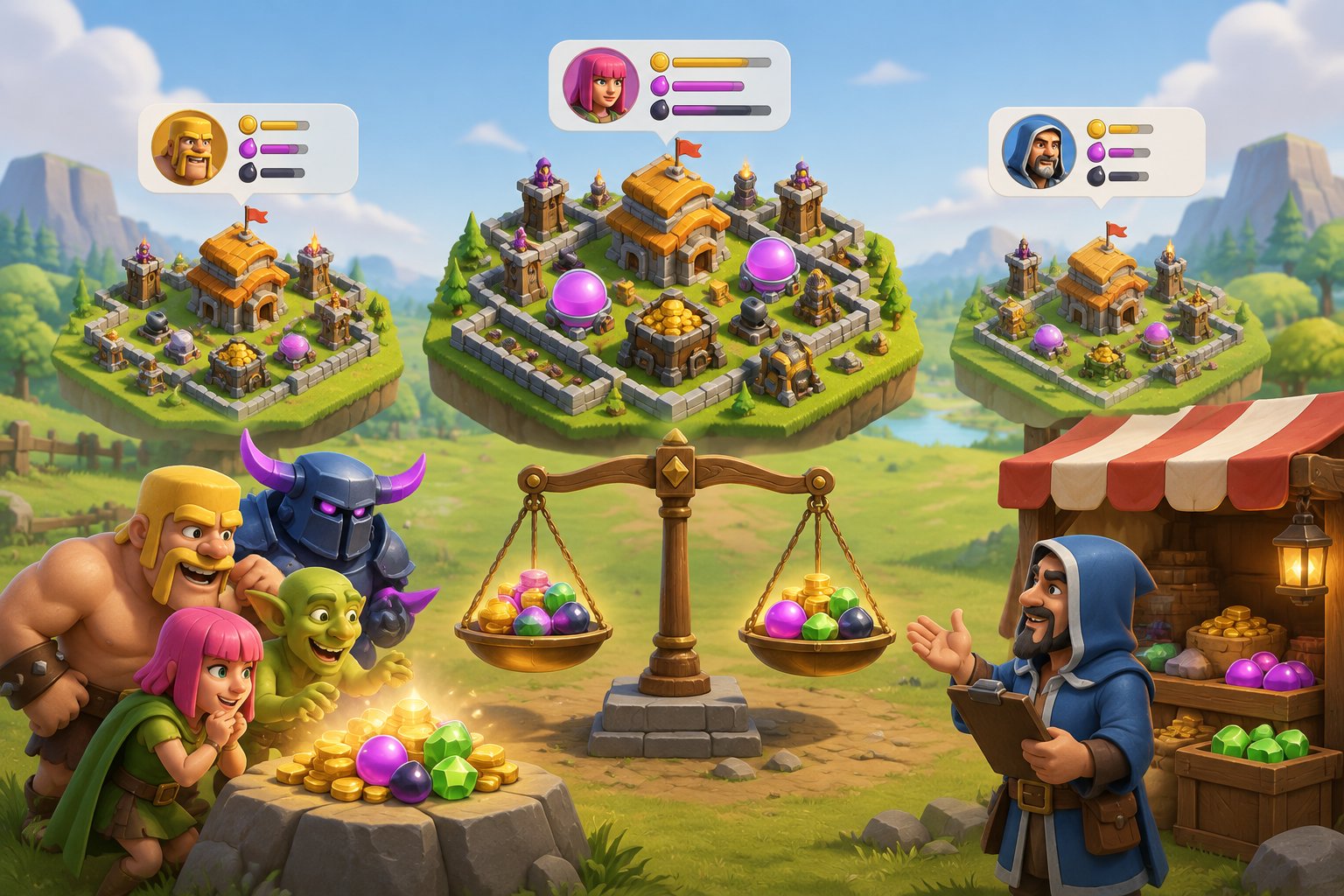
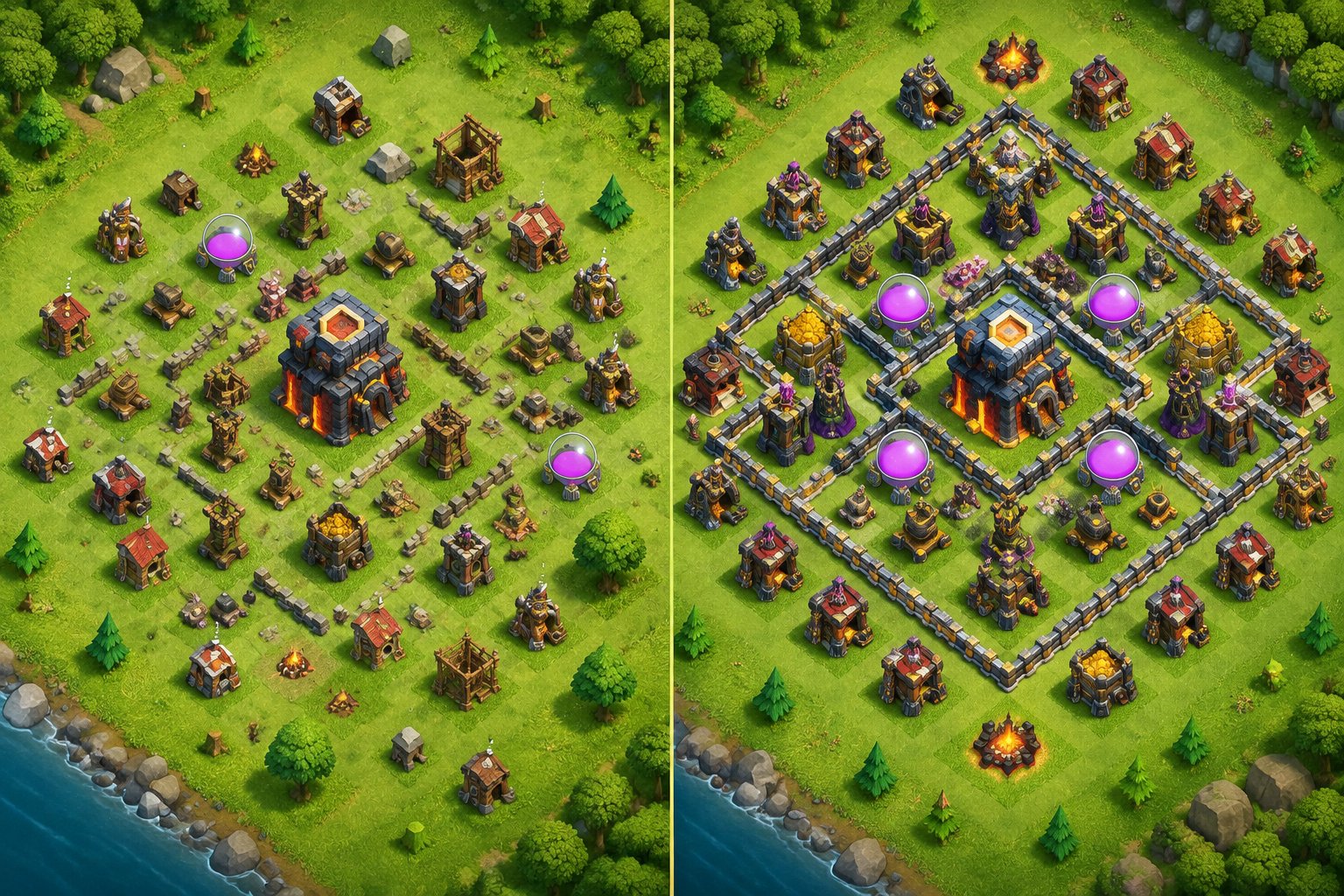
For buyers comparing rushed vs developed clash of clans accounts, a developed village is a stronger fit for dependable wars and flexible play, while a rushed village suits buyers who prioritize access to a higher Town Hall and accept a catch-up plan. A Town Hall number alone says little about the strength of the army, heroes, and defenses behind it.
Buyers can compare the village’s upgrade balance, war readiness, and account-access risks before weighing a listing. The Clash of Clans marketplace hub is the relevant category page for checking current offerings.
What Do Rushed and Developed Accounts Look Like?
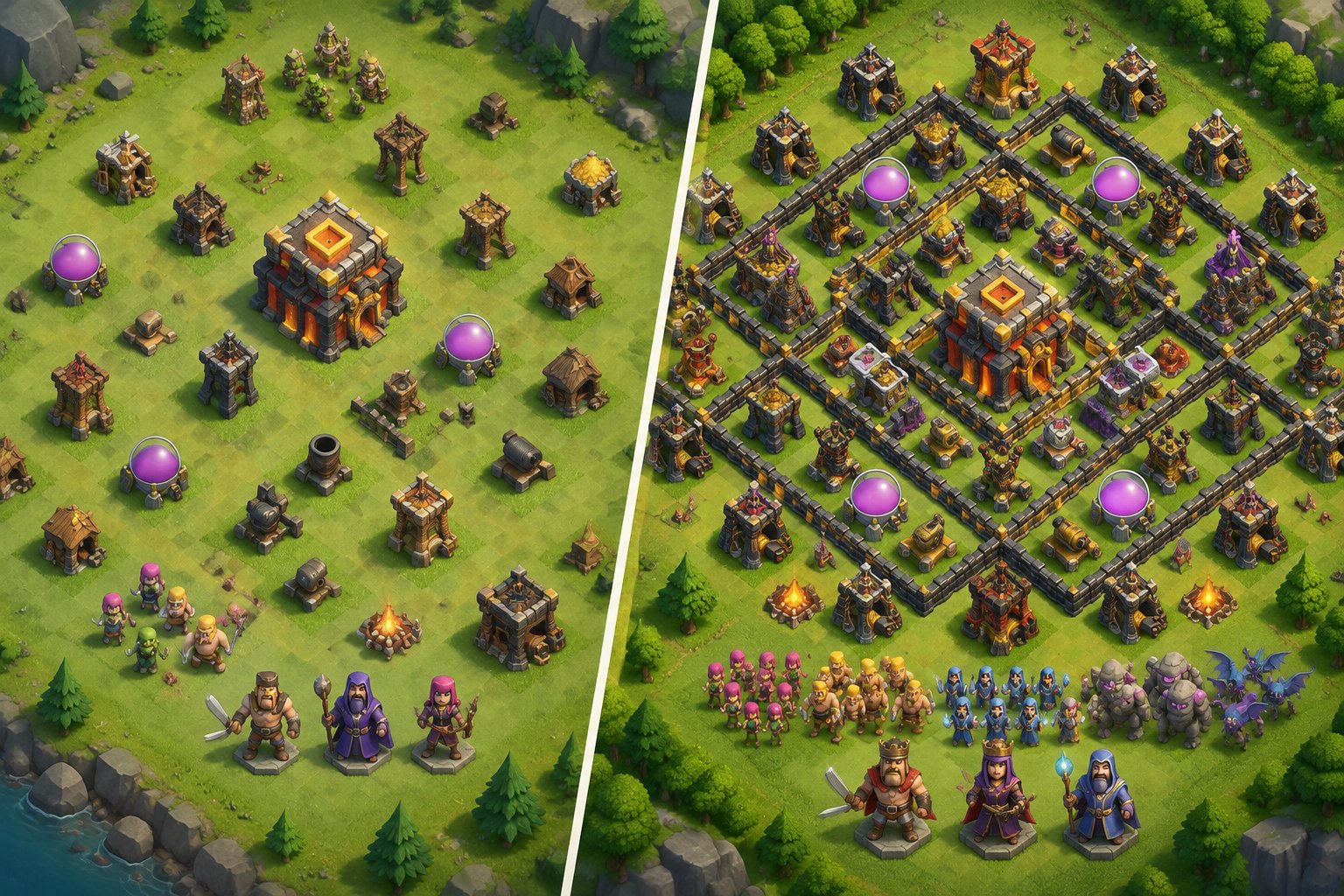
A rushed account has advanced its Town Hall level ahead of key upgrades, while a developed account has built more consistent progress across its village. A developed account can still have unfinished upgrades; “developed” describes balance and readiness, while “maxed” means upgrades are complete for a particular Town Hall level.
What makes a village rushed?
A village looks rushed when its town hall level has outpaced its core progression. Common signs include low hero levels, underleveled troops and spells, and defenses or walls that lag behind what the Town Hall allows. One gap alone does not define the whole account, so buyers should compare several parts of the base.
A TH16 account with weak heroes and a limited army may perform below a balanced TH15 account in many attacks. The same check applies to a th16 account, a th15 account, or a base at th 14: the label matters less than the level of its key upgrades. A maxed th16 account has completed the available upgrades for that Town Hall, while a newer th18 base may still be progressing.
How does a developed account differ from a maxed one?
A developed account has solid progress across its main combat systems, even if some upgrades remain unfinished. A maxed account has completed the upgrades available at its current Town Hall level, so its profile gives a clearer picture of its finished progression.
Comparison | Rushed account | Developed account |
|---|---|---|
Town Hall level | High for its upgrades | Supported by broad progress |
Heroes and army | Noticeable level gaps | More consistent combat levels |
Defenses and walls | Often lag behind | Closer to Town Hall strength |
Upgrade backlog | Extensive | Smaller or near-complete |
A seller’s “maxed” label should always be read in context. Buyers can check whether it means maxed for the current Town Hall, maxed heroes, or a fully completed base.
Which Progression Signals Matter Most?
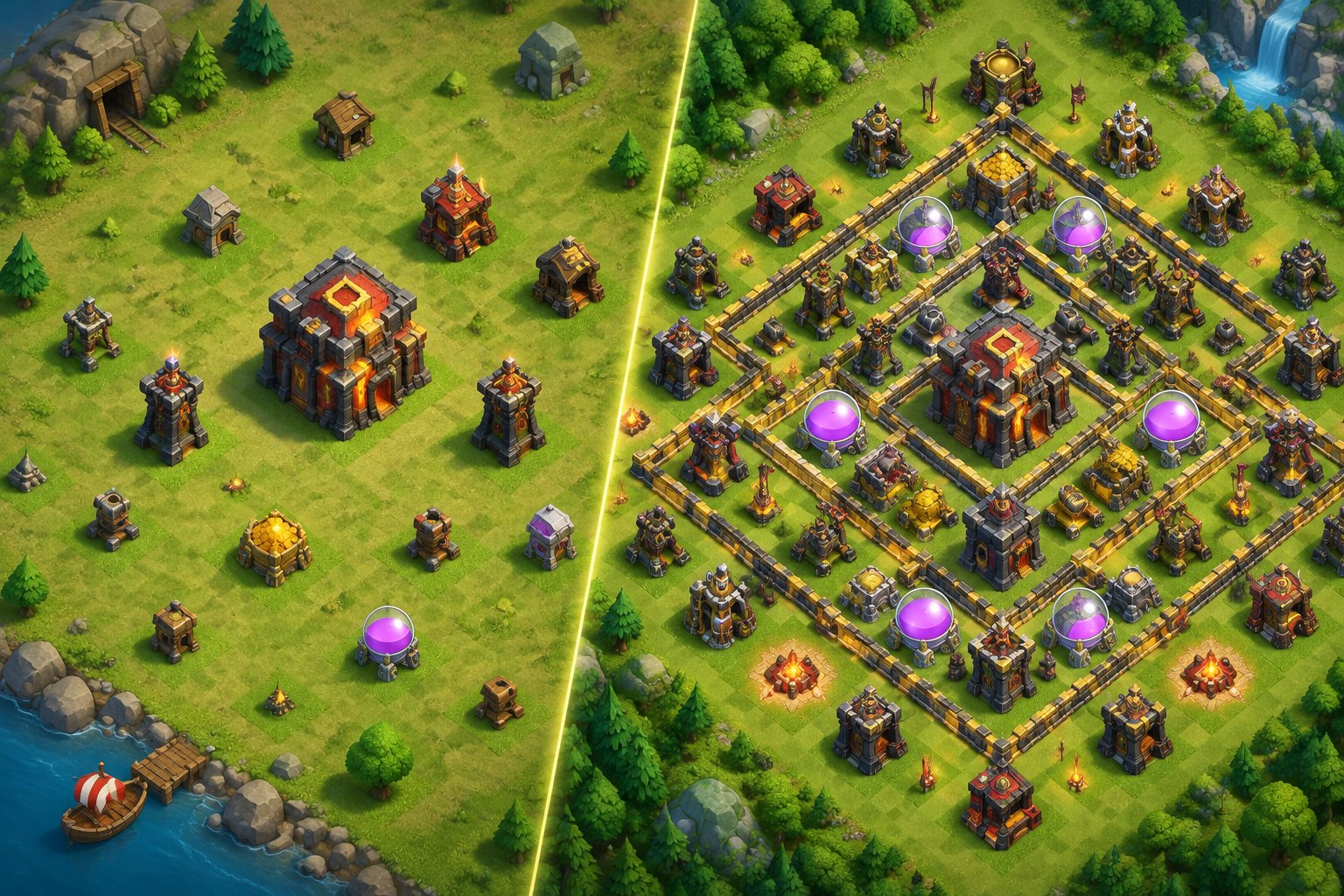
Hero levels and usable attack options reveal combat readiness quickly, while the rest of the village shows how much catch-up work remains. A listing’s Town Hall label gives a starting point; buyers should also inspect the hero roster, troop levels, defenses, and support systems.
Why should you compare hero levels first?
Hero levels provide a quick view of how much permanent combat progression an account has completed. Buyers should review the barbarian king, archer queen, grand warden, royal champion, and minion prince, then compare their levels with the account’s Town Hall. A high Town Hall paired with several low-level heroes signals a significant upgrade backlog.
The hero hall also helps buyers assess the account’s hero progression. Hero equipment adds another layer: the inventory and upgrade levels of regular and epic equipment can affect the options available in attacks. Maxed heroes are a useful signal, though they do not confirm that troops, spells, or defenses are equally developed.
How can you assess troops, defenses, and the rest of the base?
Buyers should check troop levels and spells in the laboratory, then review whether the army supports attack strategies they know how to use. A broad set of usable troops gives an account more flexibility than a roster with a few strong units and many neglected options.
Defenses and walls show how much the village can withstand, while pets contribute to hero support. Buyers can also review barracks and newer defensive structures such as the multi-archer tower to spot incomplete upgrades. Builder base progress is a separate measure of account development, so it should be considered alongside the home village rather than treated as a substitute for it.
How Does Account Progress Affect Wars and Play?
A balanced account is easier to deploy across clan wars, CWL, and trophy play, while a rushed account calls for more selective roles and attack planning. Match outcomes still depend on player skill, clan composition, and strategy, so progression alone cannot predict a win.
Why can a rushed village struggle in wars?
A rushed village can enter wars with weaker defenses and attacks than its Town Hall level suggests. That gap can make it harder to defend its position on a roster and to execute attacks against comparable opponents. Underleveled heroes or troops may also limit the attack strategies available to the player.
War stars show previous results, but they do not prove that an account is currently ready for a particular matchup. Buyers evaluating a war-focused account should inspect recent progress and the army levels behind those stars. Clan war leagues and CWL participation also reward reliable attacks across repeated rounds, which makes consistent offense valuable.
Which account type suits CWL, farming, or trophy pushing?
A developed account suits players seeking a more dependable base for clan war leagues, wars, and legend league. Its balanced army and heroes support a wider range of attacks, while a rushed account can suit farming when the player is prepared to use efficient armies and invest in skipped upgrades.
A rushed village also appeals to players who value access to higher Town Hall content and can accept uneven combat strength during recovery. Clan capital activity gives clans another way to contribute, though it does not replace the need to assess home-village progression for wars or trophy pushing.
What Should Buyers Check Before Choosing?
Buyers should verify the account’s actual progression, access history, and included resources before judging its listing by Town Hall level or price. Clash of Clans accounts can look similar in a headline while differing sharply in heroes, equipment, upgrade backlog, and account-control risk.
How do you compare a listing with its Town Hall level?
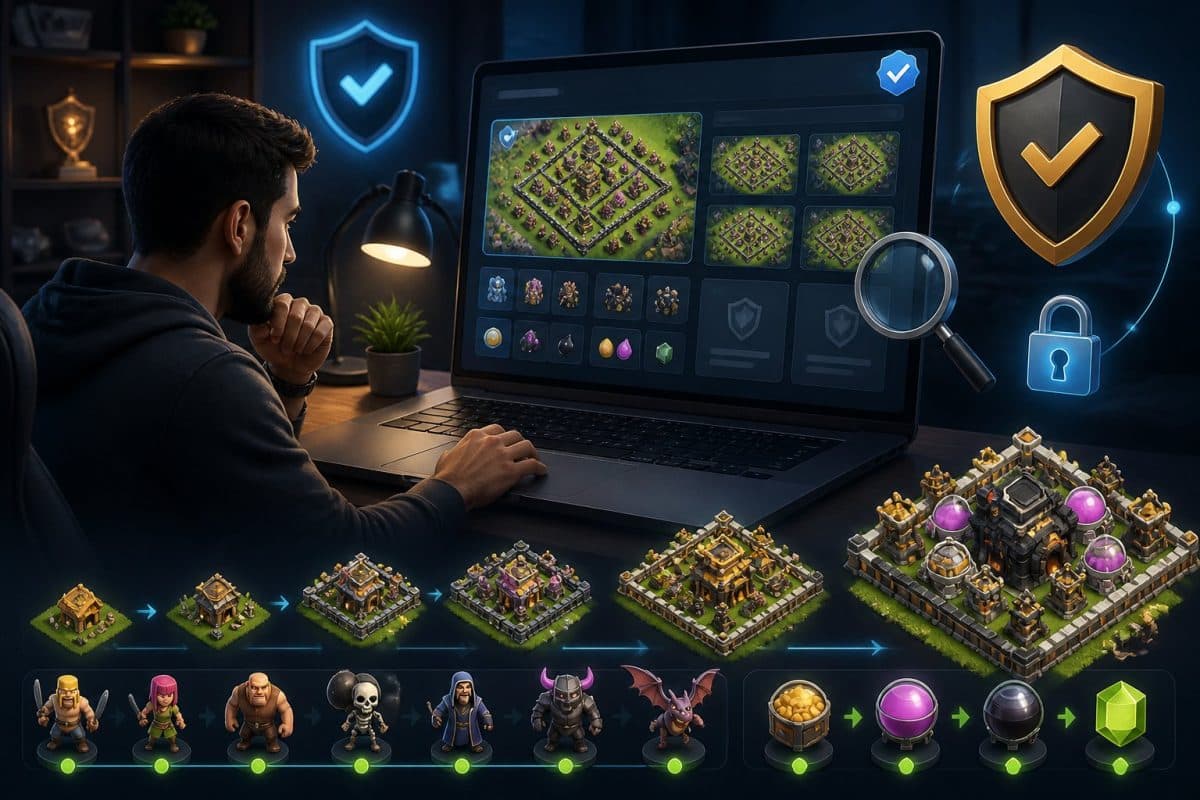
The listing’s Town Hall should match the visible base, and its description should make clear whether “maxed” refers to heroes, selected troops, or the entire village. Screenshots or a live viewing can help confirm hero levels, laboratory progress, defenses, walls, and equipment. Buyers should check the same categories across listings to make the comparison consistent.
A coc account with a higher Town Hall can carry more unfinished work than a lower-level developed account. Progression, account access, and any included gems and magic items all affect value, so a headline level alone cannot establish whether a listing is a good fit.
What should you know about account access and transfer risks?
Supercell’s terms prohibit buying, selling, or sharing accounts, so an account transaction carries a risk of access loss or enforcement. A seller’s promise of permanent ownership cannot remove that risk.
Supercell ID control and account recovery history deserve careful attention because an original owner may retain information that can support a recovery attempt. Buyers should avoid sharing sensitive credentials until they understand the transaction process and should treat requests to bypass account protections as a warning sign.
How do gems and magic items affect value?
A verified gem balance and useful magic items can add practical value by helping with upgrades or progression. Their usefulness depends on the account’s needs, item types, and whether the buyer can confirm the displayed balance before payment.
Buyers should request clear, current evidence of gems and magic items, then compare those details with the account’s upgrade backlog. A large resource balance does not compensate for weak heroes or an underdeveloped army when the intended use is competitive play.
Choose the Account That Fits Your Preferred Progression
A developed account is the clearer choice for buyers who want a balanced village ready for varied play, while a rushed account fits those willing to manage its upgrade backlog. The rushed vs maxed choice comes down to current combat readiness versus higher-level access and ongoing repair work.
Before choosing, buyers can compare hero levels, troop and spell progression, defenses, and account-access risks. A listing that clearly documents those details is easier to judge than one built around Town Hall level alone.
Frequently Asked Questions
What is considered rushed in Clash of Clans?
An account is considered rushed when its Town Hall advances well ahead of core upgrades such as heroes, troops, spells, or defenses. The more major gaps it has across those areas, the more pronounced the rush.
Is rushing better in Clash of Clans?
Rushing suits players who want earlier access to higher-level content and are willing to prioritize offense and later catch up. Players focused on balanced wars or immediate versatility may prefer a more developed base.
Can a rushed account become developed?
Yes, a rushed account can become developed by upgrading its most important offensive and defensive gaps over time. The backlog can be substantial when many Town Hall levels were skipped.
Do hero levels matter more than Town Hall level?
Hero levels provide a stronger clue to combat readiness than Town Hall level alone. Town Hall still indicates access to buildings and content, so both measures belong in a buyer’s comparison.
How can I tell when a Clash of Clans account was created?
A standard player profile does not provide a simple, definitive creation date for every account. Buyers can ask for supporting account history, though any evidence should be treated cautiously and should not replace checks of progression and account access.