Ready to buy? Browse verified LoL accounts and hand-leveled LoL smurf accounts on LoLBoost.
Check the Value of Ranked Accounts on lolboost.gg — Quick Guide to Pricing and Verification
Want to know how much a ranked League account is worth on lolboost.gg and whether it matches your goals? lolboost.gg gives an instant, data-driven estimate that factors rank, skins, champions, and other account attributes so you can see a clear market value quickly.
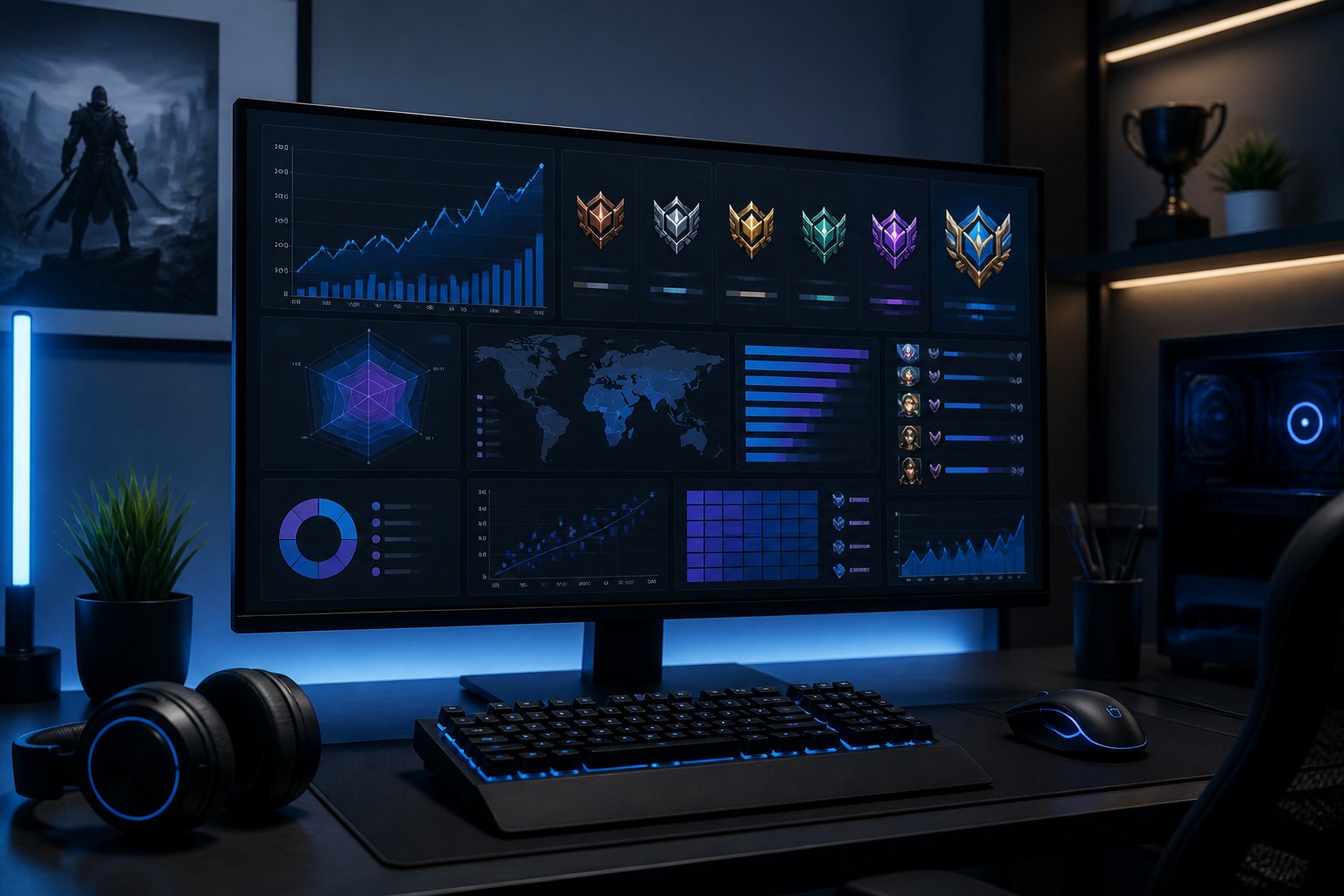
You’ll get a practical walkthrough of how the site calculates those values, what metrics matter most for increasing worth, and how to use the platform’s tools safely. Expect step-by-step guidance, comparisons to other valuation tools, and security tips so you can check and improve your account value with confidence.
Understanding League of Legends Account Ranking Systems
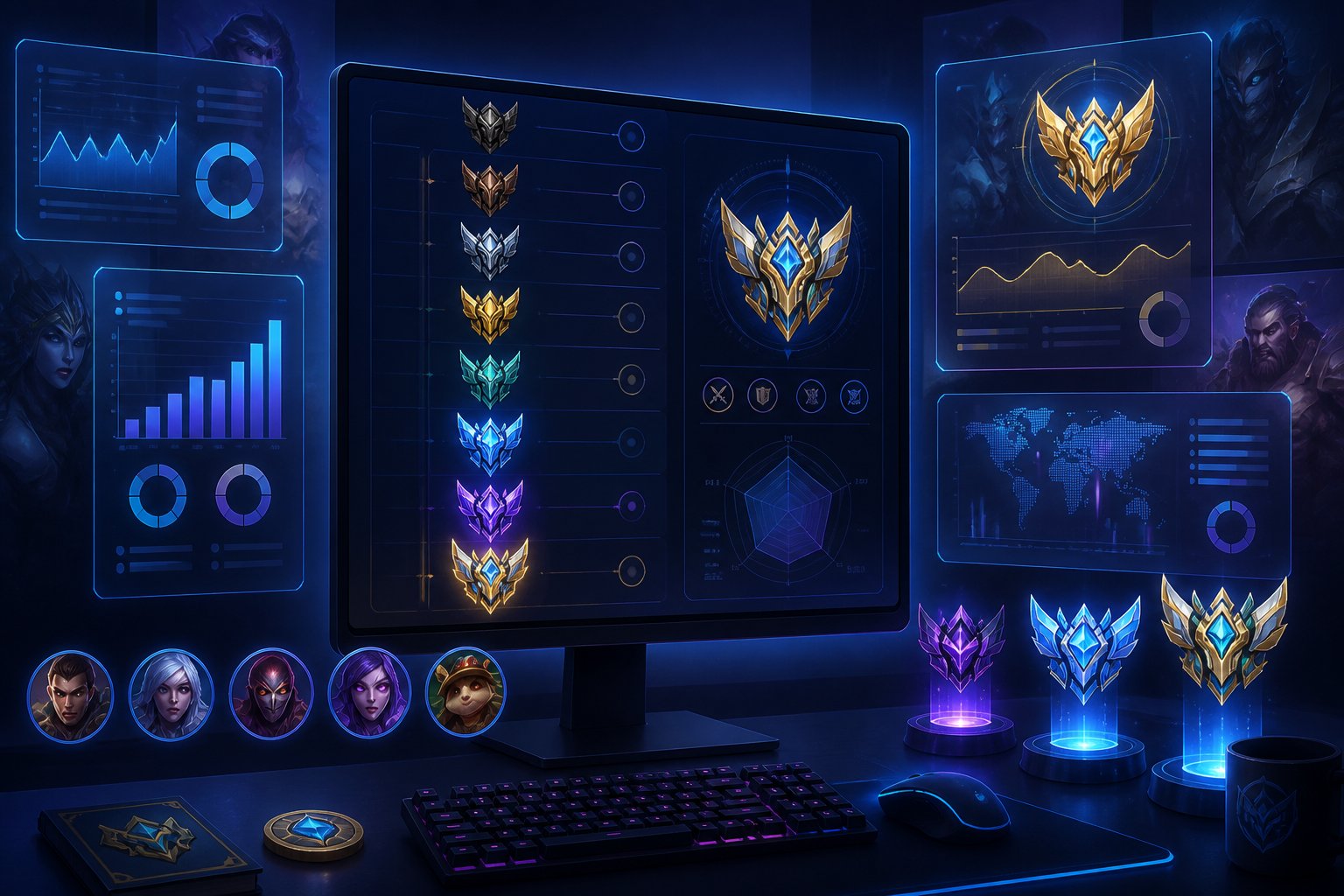
You will learn how Riot classifies skill, how those ranks feed into market value, and which specific account traits buyers and sellers care about most.
League of Legends Rank Tiers
Ranks run from Iron up to Challenger and are split into divisions (IV–I) inside tiered bands like Bronze, Silver, Gold, Platinum, Diamond, Master, Grandmaster, and Challenger. Each tier reflects a general skill bracket and matchmaking group; higher tiers place you against stronger opponents and show higher MMR.
League Points (LP) measure progress inside a division. Winning grants LP, losing deducts it; promotion series or soft resets affect movement between tiers. Riot’s visible rank is what most buyers look at first, but underlying MMR and recent activity can be more telling of true strength.
How Account Value Is Determined
Market value hinges on visible rank, LP, and peaked ranks. Buyers pay a premium for accounts with consistent high-tier placement, recent promotion history, or a shown peak in Master/Grandmaster/Challenger. Verified ranked placements on the account’s server and region consistency also add value.
Other monetary factors include owned champions, skins, and cosmetic rarity; however, pure ranked markets weight competitive standing highest. Accounts with suspended history, linked payment methods, or weak security reduce price and demand significantly.
Factors Affecting Ranked Account Worth
Key factors you should check before valuing an account:
- Visible Rank & Division (e.g., Diamond II vs. Diamond IV)
- Peak Rank and historical climb data
- Current LP and recent winrate in ranked queues
- Account age, region, and number of ranked placements
Additional influencers:
- Champion pool size and mastery levels
- Skins (legendary/legacy increase value), ward skins, emotes
- Account security flags: phone/email verification, past bans, or chargebacks
Use a checklist when assessing accounts: Rank, Peak, LP, Recent Winrate, Champion/skin inventory, and Security status. Quantify those elements when comparing listings to get a consistent price estimate.
How lolboost.gg Calculates Account Values

You get a numeric estimate based on rank, content, and recent performance. The system weights competitive progress, collection depth, and transaction-relevant metrics to produce a market-facing price.
Valuation Algorithms and Criteria
lolboost.gg applies a weighted model that starts with your account’s highest and current ranked tiers. The base price anchors on tier (e.g., Platinum, Diamond) and division (IV–I), then adjusts for region and queue type (solo/duo vs. flex).
The algorithm factors in account level, total champions owned, and number of permanently unlocked slots or boosts that affect playability. It decreases value for bans, restrictions, or standing penalties that reduce account utility.
Key modifiers include:
- Rank delta: recent climb or drop within the last season.
- Region multiplier: demand differences across servers.
- Availability of smurf/placement-ready flags that buyers prefer.
Role of Win Rate and Match History
The system examines recent match history to assess consistency and skill reliability. A sustained high win rate in the last 50–100 games increases value because buyers prioritize accounts that demonstrate stable performance at that rank.
Conversely, long win-loss streaks, frequent inactivity, or evidence of boost play that skews stats can lower confidence and reduce the price.
What the valuation inspects:
- Win rate over recent sets (short-term trend).
- Ranked game count at current tier (experience at level).
- Suspicious patterns (sudden rank jumps or matched VPN signals) that trigger manual review.
Impact of Skins, Champions, and Content
Your skin collection and champion pool contribute directly to account appeal and price. Rare, prestige, mythic, or ultimate skins carry higher per-item value than commons; a compact list of high-rarity skins can outvalue a large number of basics.
Champion ownership matters for playability—complete or near-complete rosters add value because buyers can play varied metas immediately.
Content factors assessed:
- Skin rarity breakdown (legendary/mythic vs. standard).
- Champion count and key meta champions owned.
- Additional items: chromas, ward skins, emotes, and remaining RP/BE balance.
Step-by-Step Guide to Checking Account Values
You will locate the value tool, enter specific account details, and read a breakdown of price drivers like rank and skins. The process focuses on accurate inputs and understanding how each data point affects valuation.
Navigating the lolboost.gg Interface
Open lolboost.gg and find the "Account Value" or "Calculator" link in the main menu or footer. The tool usually appears as a standalone page with a clean form; look for fields labeled "Region," "Summoner name," and "Rank."
The page groups inputs logically. Use dropdowns for region and server, and type fields for numeric values (level, champion count). If the site offers examples or a help icon, click it to see acceptable formats for names and numbers.
Look for a visible "Calculate" or "Estimate" button after you finish entering data. Some pages update estimates live as you edit fields, while others require submitting the form. Note any warnings about private or banned accounts before proceeding.
Required Information for Value Assessment
You must provide the server/region and ranked tier prominently; these drive most of the estimate. Enter exact current rank (e.g., Platinum IV), account level, and total champions owned for a baseline value.
List the number and rarity of skins you own when prompted—common, epic, legendary, mythic, ultimate—and include chromas. Also supply remaining RP/BE balances if the tool asks, since they slightly affect market value.
Include account accessibility details if requested: verified email, linked phone, or two-factor authentication. These security features raise buyer confidence and increase the estimate modestly. Do not guess—use precise counts and current rank to avoid misleading results.
Interpreting the Results
The calculator will present a numeric estimate and a breakdown by factor. Expect rank and skin rarity to account for the largest portions; level and champion pool contribute smaller amounts.
Read each line item: it commonly shows base value, skin bonus, server multiplier, and security bonus. If the tool provides a price range, treat the lower bound as conservative and the upper bound as ideal market conditions.
Use the output to decide whether to improve rank, buy targeted skins, or adjust security settings before selling. If values seem off, double-check inputs and rerun the estimate; small input errors can change the result significantly.
Enhancing Your Account's Valuation
Focus on measurable improvements: climb rank efficiently, expand valuable inventory items, and tighten in-game performance metrics that buyers care about. Each action below targets a specific value driver buyers on marketplaces and services look for.
Improving Ranked Progression
Prioritize consistent rank gains over erratic spikes. Win-rate, recent rank history, and peak rank matter most to buyers; aim for a stable climb through focused duo queues or a consistent champion pool. Track your MMR trend and avoid frequent demotions—buyers prefer accounts with recent positive match history and minimal volatility.
Use targeted practice to shorten the grind. Learn 2–3 meta champions per role and refine wave management, objective timing, and macro decision patterns. Play fewer filler games; concentrate on placements and promo series to lock in higher tiers.
Document proof of rank stability. Screenshots of ladder progression, match histories showing win streaks, and recorded VODs of clean gameplay increase buyer confidence and often raise asking price.
Increasing Inventory Value
Skins, chromas, and legacy cosmetics drive most of the non-rank value. Identify rare or event-only skins and prioritize unlocking or preserving them. Buyers pay premiums for limited-run cosmetics, high-tier chromas, and prestige items, so note their names and editions clearly in listings.
Fill gaps that commonly reduce value: aim for key champ ownership for popular roles and ensure account level unlocks that buyers expect (e.g., rune pages, icon sets). Keep billing and region consistent; accounts with verified purchase history and no region conflicts trade at higher prices.
Organize an inventory summary for listings: include a concise table of top skins, prestige items, RP/BE balances, and champion counts. Be transparent about account bans or suspension history—honesty preserves price and speeds sale.
Optimizing Match Performance
Boost in-game statistics that buyers review: KDA, average CS at 10/15 minutes, objective participation, and vision score. Prioritize improving CS first—consistent early farm is quantifiable and visible in match histories. Buyers scan these numbers to judge how playable the account is at advertised rank.
Refine playstyle to reduce tilt and AFK incidents. Maintain positive honor levels and no recent reports; many buyers avoid accounts with recent disciplinary marks. Use premade queues selectively to ensure game quality and maintain favorable win conditions during promotional stretches.
Record and present recent match metrics. Export match history snippets or use third-party stat pages to show stable KP%, average damage, and warding. Concrete, recent stats move buyer perception from vague claims to verifiable performance.
Comparing Account Value Tools
You’ll see differences in data inputs, transparency, and marketplace alignment between services. Focus on which metrics each tool uses, how they source market prices, and how frequently they update their valuations.
lolboost.gg Versus Competitors
lolboost.gg emphasizes ranked status, division, and visible account attributes like champions and skins when estimating value. You get a clear price tied to current rank and available boosts, which is useful if you plan to sell or hire a booster.
Competitors often expand inputs—counting skin rarities, BE/RP balances, honor level, and past season rewards—to produce higher-granularity estimates. Some sites cross-reference actual marketplace sales; others rely on static weightings that can lag real demand.
Key differences to check:
- Data inputs used (rank, skins, BE/RP, honor).
- Whether the tool pulls live market sales or uses fixed multipliers.
- UI transparency: do they show how each factor affects price?
- Pick the tool that matches your intent: listing for quick sale, pricing for transfer, or valuation for comparison.
Accuracy and Reliability Analysis
Accuracy depends on source data and update cadence. If a tool like lolboost.gg updates prices based on active boost listings and current ranked trends, its estimates reflect what buyers actually pay. Tools that factor in skin rarity tiers (epic, legendary, mythic, ultimate) and show itemized breakdowns let you verify values yourself.
Watch for these reliability signals:
- Clear methodology or formula disclosure.
- Frequency of market-data refresh (daily/weekly vs. static).
- Cross-checks with recent completed sales or multiple marketplaces.
- Avoid tools that provide a single “black box” price without itemized justification. You want an estimate you can reconcile with screenshots, transaction history, or competitor listings before making decisions.
Security and Privacy Considerations
When you check the value of ranked accounts on lolboost.gg, verify what personal data the listing exposes. Look for visible details like rank, skins, and champions rather than account credentials or bound email addresses to reduce identification risk.
lolboost.gg and similar marketplaces normally log transactions and some service activity. Expect recorded timestamps, purchase history, and IP-related metadata; those logs help dispute resolution but can be sensitive if mishandled.
Prioritize listings that advertise privacy protections such as VPN usage for boosting or account handover procedures that avoid sharing your primary login. Avoid sellers who require full credential transfer without safeguards.
Use strong, unique passwords and enable two-factor authentication on any account you control. If you buy an account, change recovery email and password immediately and review connected devices and sessions.
Be aware of platform rules and enforcement risks. Riot Games’ policies may prohibit buying/selling accounts, and detection can lead to penalties. That risk affects both the seller and buyer, so factor it into price and acceptability.
Quick checklist:
- Verify what public and private data is shown
- Confirm log retention and privacy policies
- Insist on secure handover steps (password change, 2FA)
- Prepare for possible platform enforcement actions
These steps help you balance convenience and risk when assessing account value on lolboost.gg.
Common Issues and Troubleshooting Tips
If a listed account shows an incorrect rank or missing information, refresh the page and check the seller’s verification badges. If discrepancies remain, contact support with the account ID and a screenshot to speed verification.
Payment problems can occur during checkout. Verify your payment method, ensure billing details match, and try an alternate card or PayPal if available. Keep transaction receipts and timestamps for dispute resolution.
You may worry about account bans or login restrictions after purchase. Look for sellers that offer warranty or replacement policies, and record the original delivery message and credentials immediately. If the account is locked, open a support ticket and provide the delivery proof.
Login credentials sometimes fail due to regional locks or pending security checks. Try logging in from the region specified and follow any on-screen verification prompts. If two-factor authentication appears, contact the seller—some accounts require pre-configured codes or removal steps.
If you receive a compromised or misrepresented account, document every interaction and take screenshots. Use the platform’s dispute system and escalate to payment provider chargebacks only after following internal resolution steps. Keep communication concise and factual.
Avoid common mistakes by confirming rank, match history access, and any attached cosmetic items before buying. Read the service’s terms and warranty details so you understand scope and timelines for fixes.